

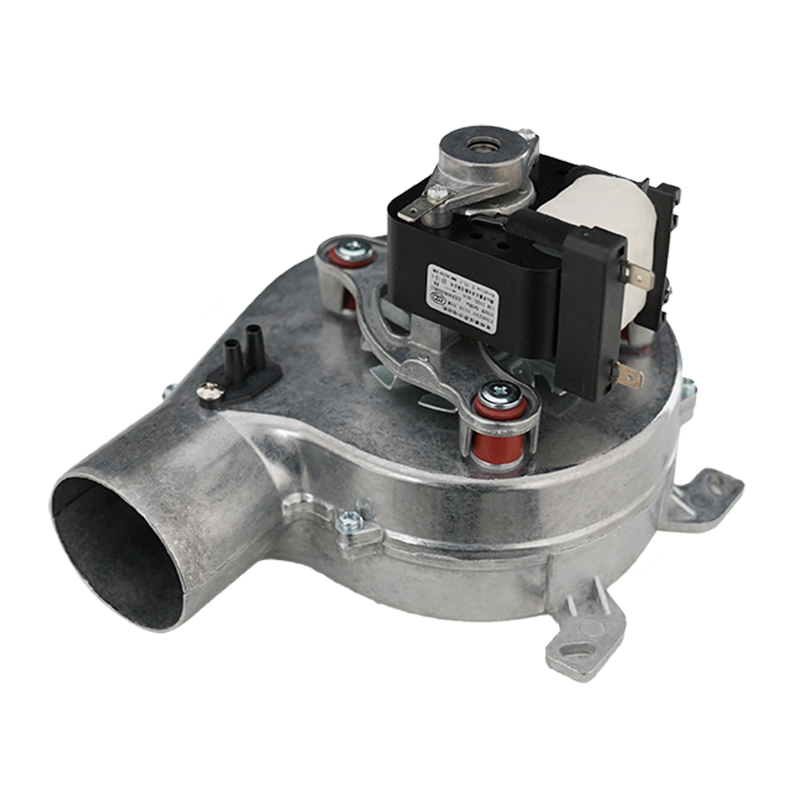
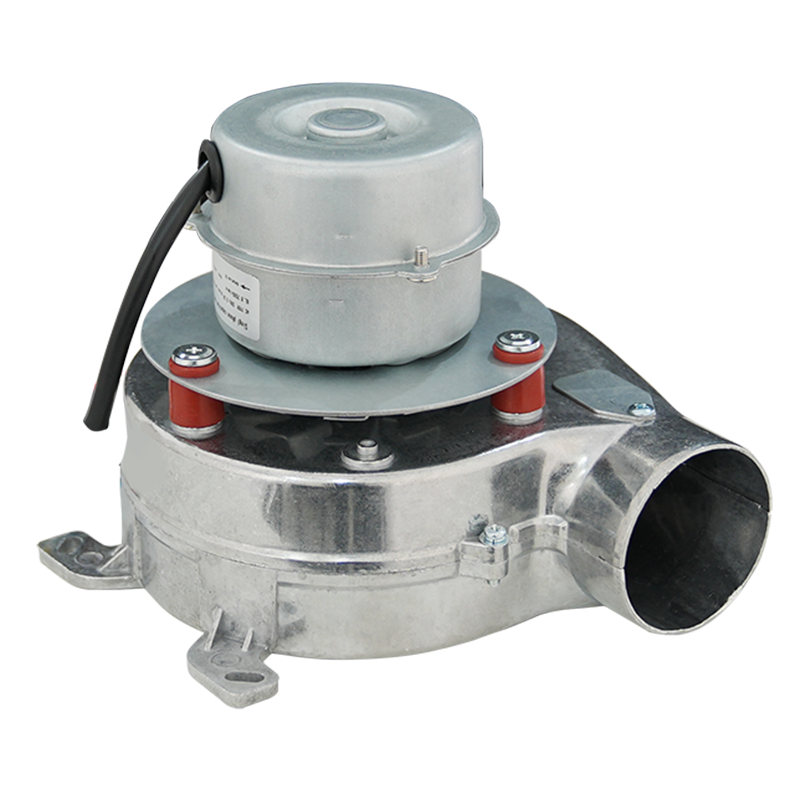
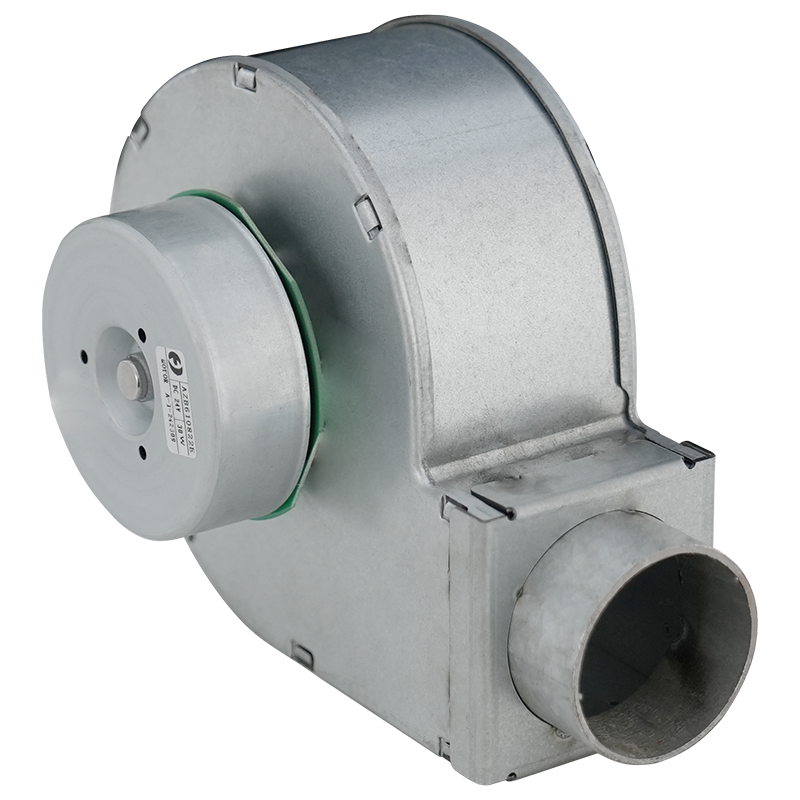
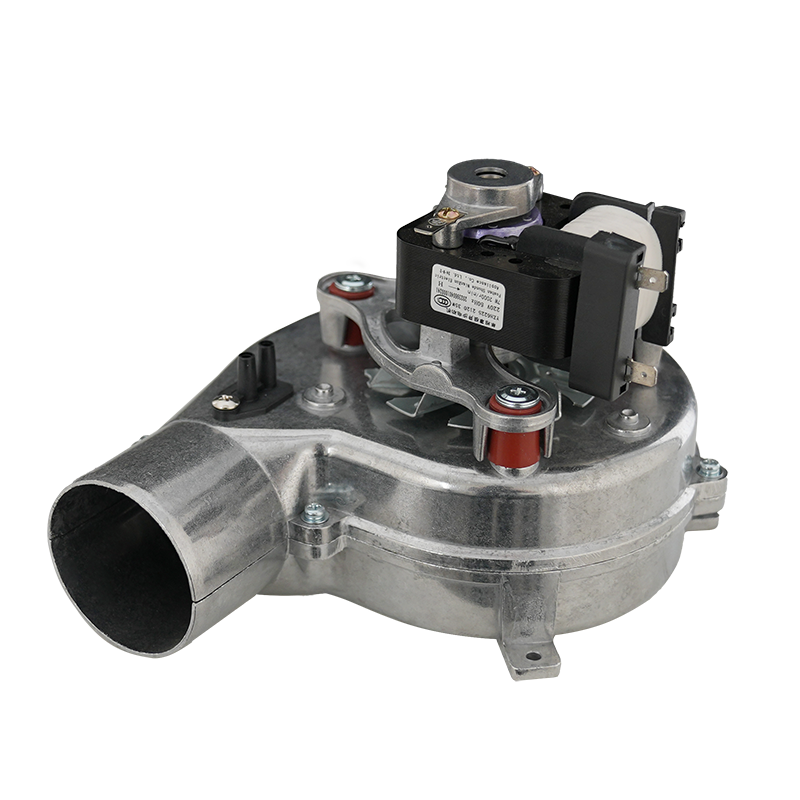
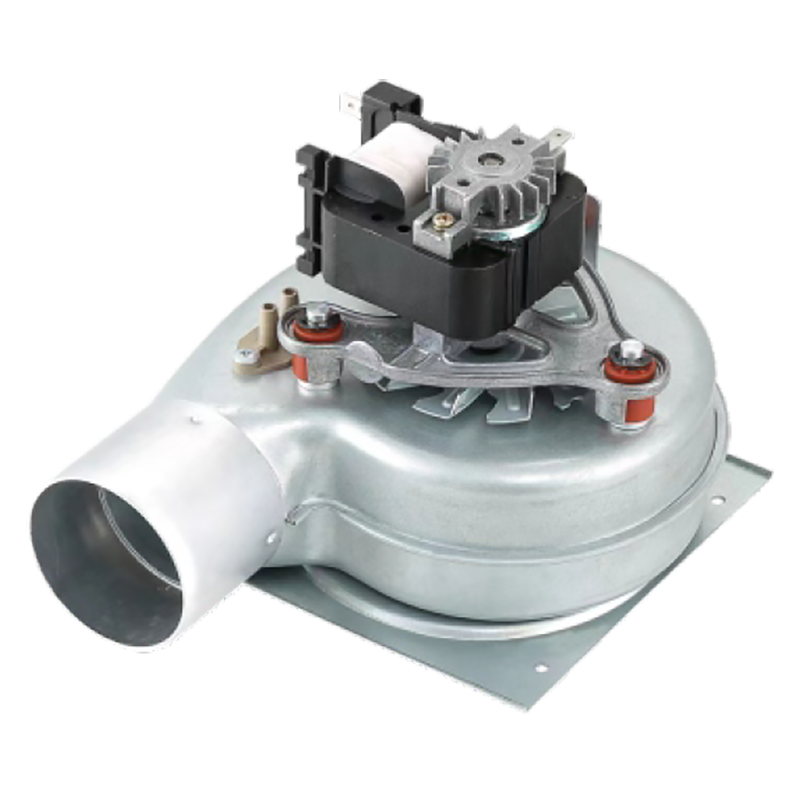
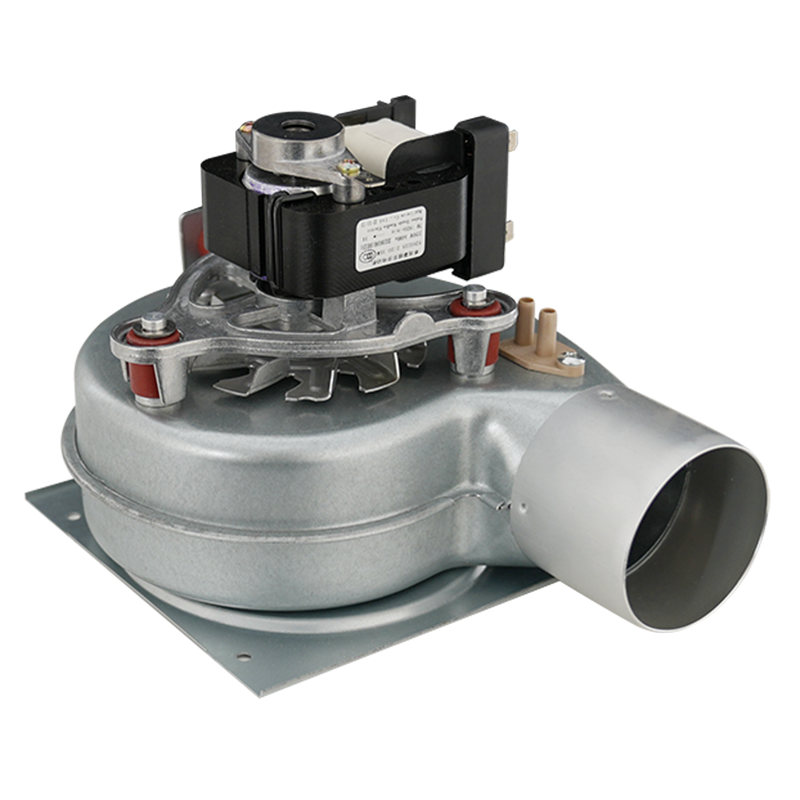

After more than a decade of development, most gas-fired heating and hot water boilers in my country now use forced air supply and exhaust systems, while natural exhaust systems are strictly prohibited from sale. The centrifugal blower fan in a wall-hung boiler draws the air needed for combustion into the combustion chamber and exhausts the resulting flue gas outdoors. Therefore, in addition to meeting the airflow requirements for combustion, the centrifugal blower fan also needs a certain pressure head to overcome the resistance of the exhaust system. When installed on the exhaust side, the centrifugal blower fan also needs high-temperature resistance.
The main types of fans used in gas-fired wall-hung boilers are: shaded-pole AC centrifugal blower fans, AC variable speed centrifugal blower fans, and DC brushless continuously variable speed centrifugal blower fans.
Shaded-pole AC fans: Currently, most atmospheric gas-fired wall-hung boilers in my country use shaded-pole AC fans. This type of motor has advantages such as simple structure, low manufacturing cost, and low operating noise.
AC Variable Speed Fan: This type of fan adds one or more coils to a single-coil shaded-pole AC motor. The controller activates the appropriate coil based on the required air volume for combustion, thus achieving different speeds. AC variable speed fans are commonly used in water heaters and gas boilers with segmented combustion, allowing for low-speed operation under low-load combustion, thereby improving the thermal efficiency of the gas boiler at low loads.
DC Brushless Continuously Variable Speed Fan: A DC brushless motor is a type of synchronous motor, meaning its rotor speed is affected by the speed of the stator's rotating magnetic field and the number of rotor poles (P): N = 120 * F/P. With a fixed number of rotor poles, changing the frequency of the stator's rotating magnetic field alters the rotor speed. A DC brushless motor adds electronic control (driver) to a synchronous motor, controlling the frequency of the stator's rotating magnetic field and feeding the rotor speed back to the control center for repeated calibration to approximate the characteristics of a DC motor. In other words, a DC brushless motor can maintain a certain rotor speed within its rated load range even when the load changes.
DC motors have the characteristics of fast response, large starting torque, and the ability to provide rated torque from zero speed to rated speed.