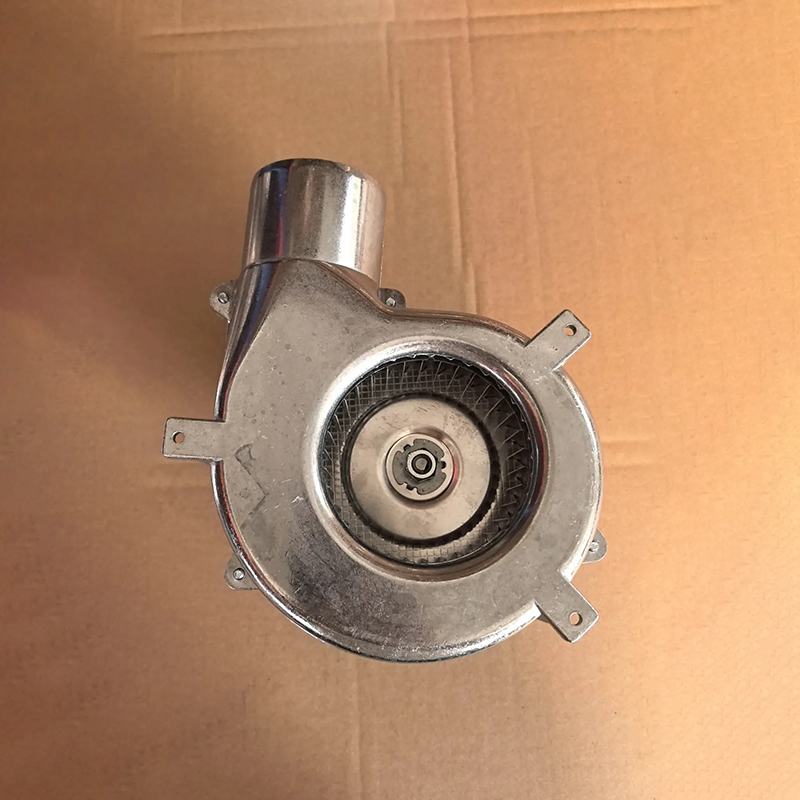

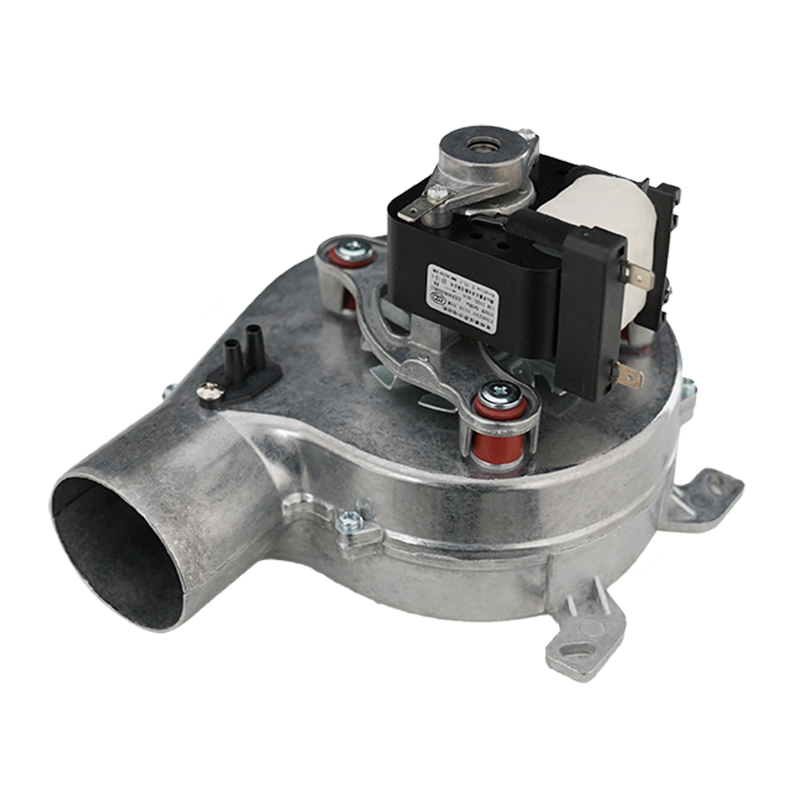
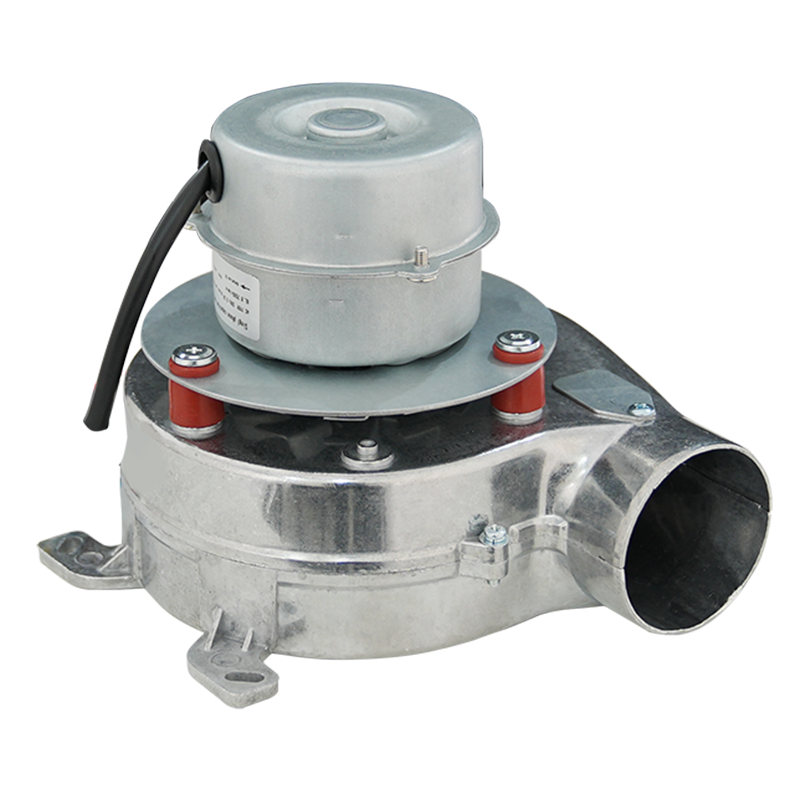
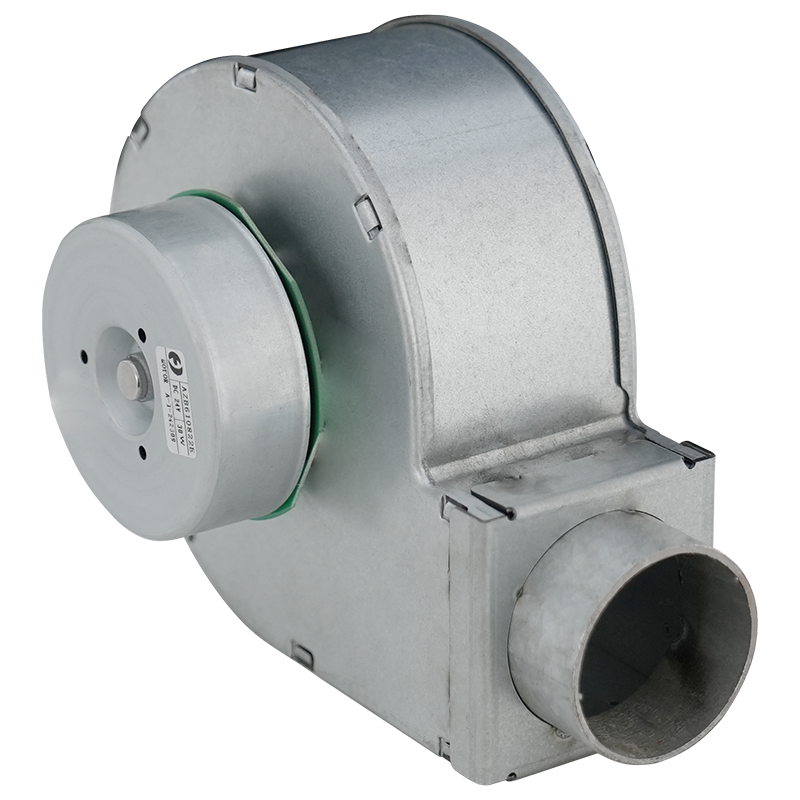
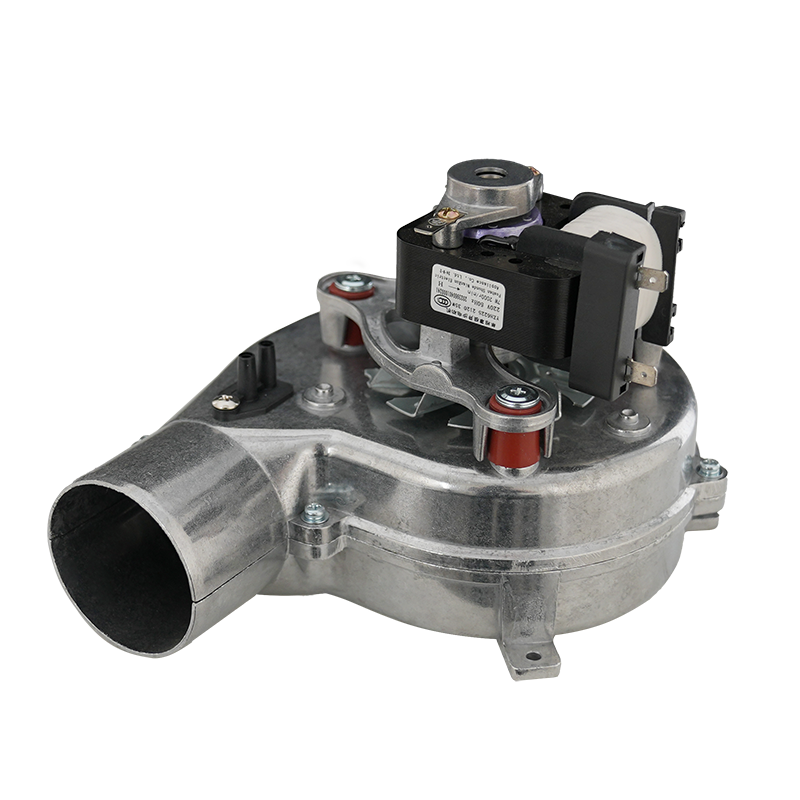
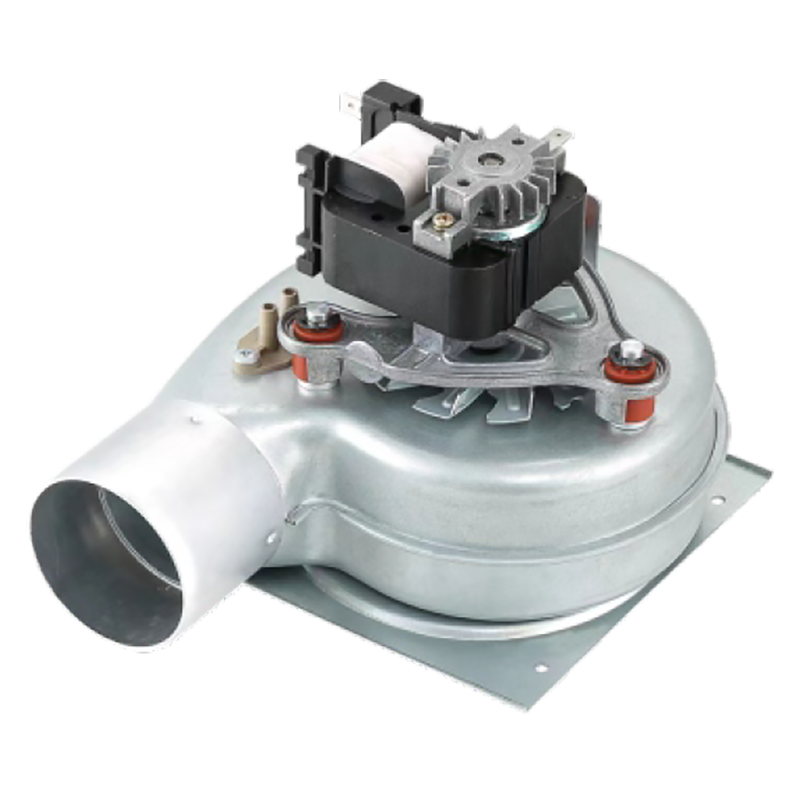
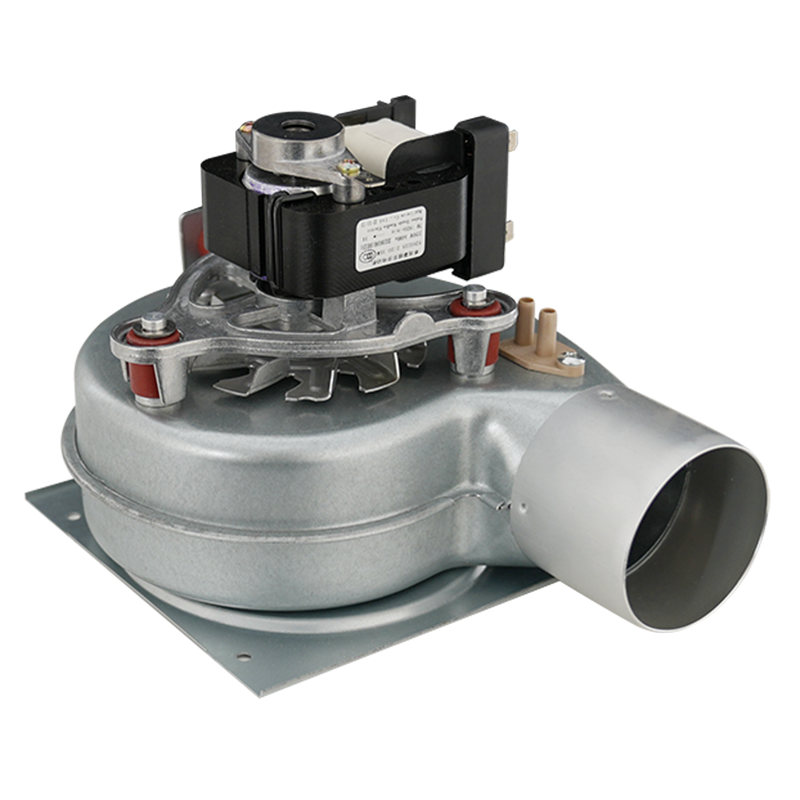
A centrifugal fan is a fluid machine that converts mechanical energy into gas pressure energy for transporting gas. Centrifugal fans and blowers consist of a casing and a centrifugal impeller. They are characterized by large air volume, stable performance, and smooth rotation, and are widely used in ventilation, dust removal, and cooling in chemical, metallurgical, power, factory, mine, tunnel, cooling tower, vehicle, ship, and building industries; ventilation and induced draft in boilers and industrial furnaces; cooling and ventilation in air conditioning equipment and household appliances; and grain drying and conveying. Centrifugal fans and blowers rely on input mechanical energy to increase gas pressure and expel the gas.
In 1862, the British inventor Guillermo del Guillermo invented the centrifugal fan. Its impeller and casing were concentric circles, the casing was made of brick, and the wooden impeller used backward-curved straight blades. Its efficiency was only about 40%, and it was mainly used for mine ventilation.
In 1898, the Irish designed the Sirocco centrifugal fan with forward-curved blades, which was widely adopted by various countries. In the 19th century, axial flow fans were used for mine ventilation and metallurgical industry blowers, but the pressure was only 100-300 Pa, and the efficiency was only 15-25%. Rapid development of centrifugal fans only began after the 1940s. In 1948, Denmark manufactured an axial flow fan with adjustable blades during operation; axial flow fans include rotary axial flow fans, meridional axial flow fans, diagonal flow fans, and crossflow fans.
In 2002, explosion-proof centrifugal fans from China were widely used in chemical, petroleum, and machinery industries, and Changlindong explosion-proof industrial centrifugal fans also saw development. Currently, the energy-saving adjustment methods for fans in stone processing enterprises are relatively outdated, generally using throttling regulation. When using flow control, the flow rate of industrial centrifugal blowers is mainly regulated by regulating valves or throttling baffles. The flow rate reduction is significant, sometimes exceeding 50% at low loads. However, due to throttling losses and operation outside the high-efficiency zone, energy waste is substantial. Adjusting the speed of the industrial centrifugal blowers, on the other hand, eliminates throttling losses and ensures the blowers always operate within the high-efficiency zone, thus significantly saving energy. Therefore, adjusting the speed of industrial centrifugal blowers is an effective energy-saving method, reflecting a new trend in current building materials industry production.