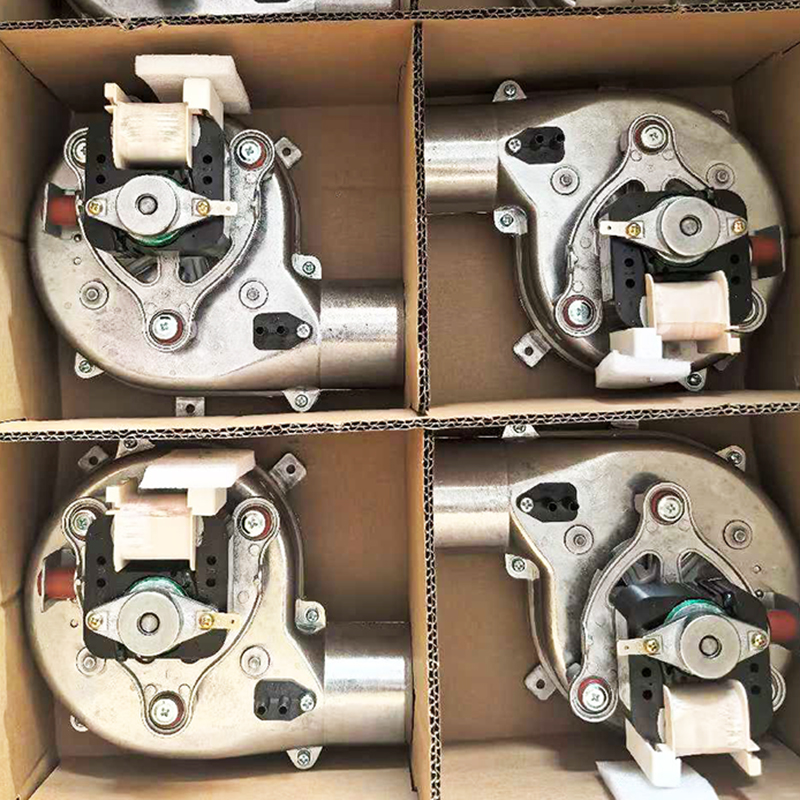

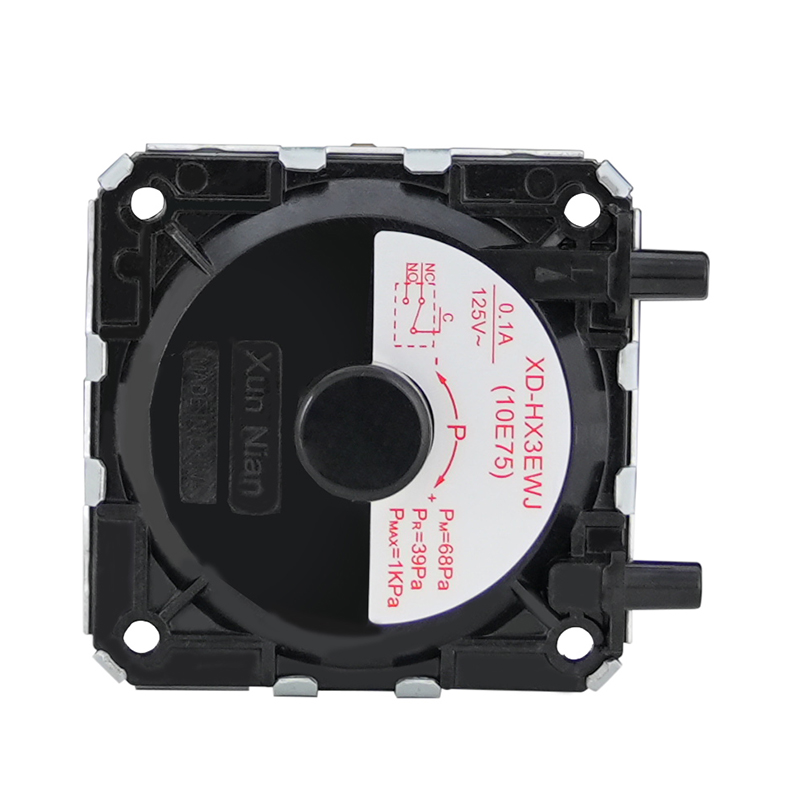
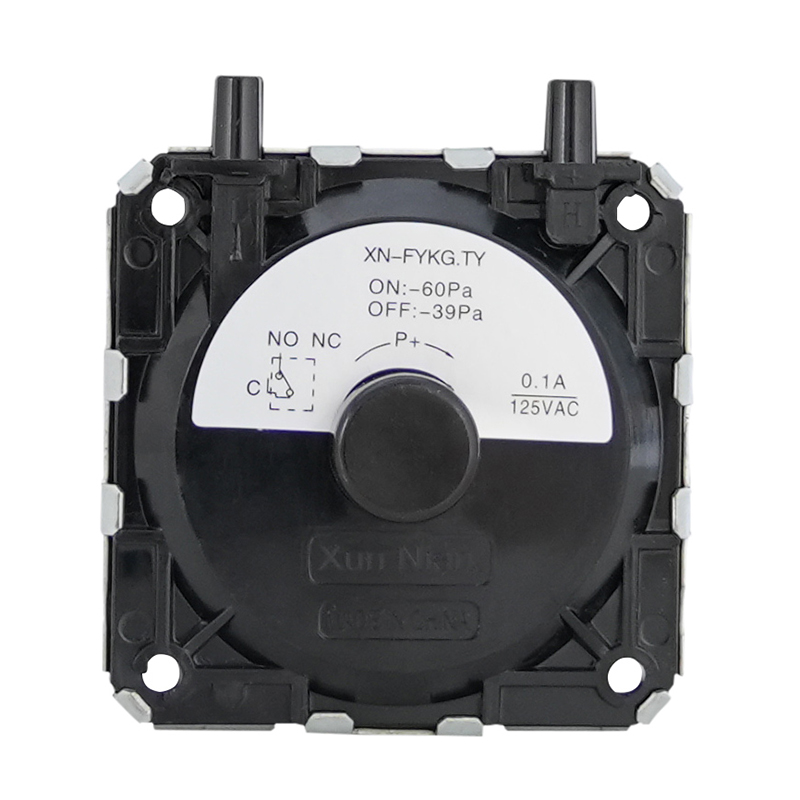
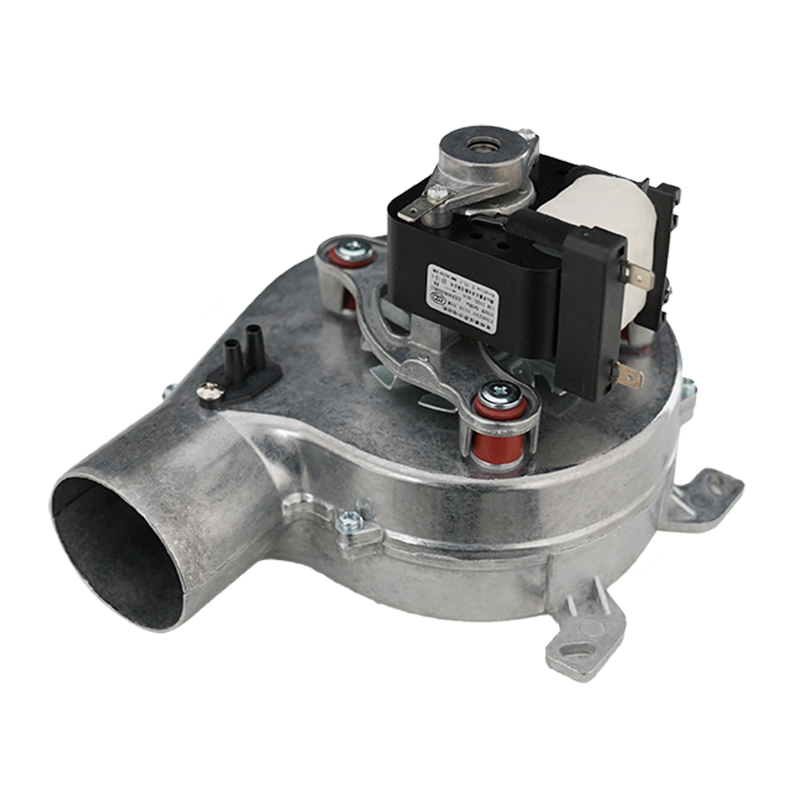
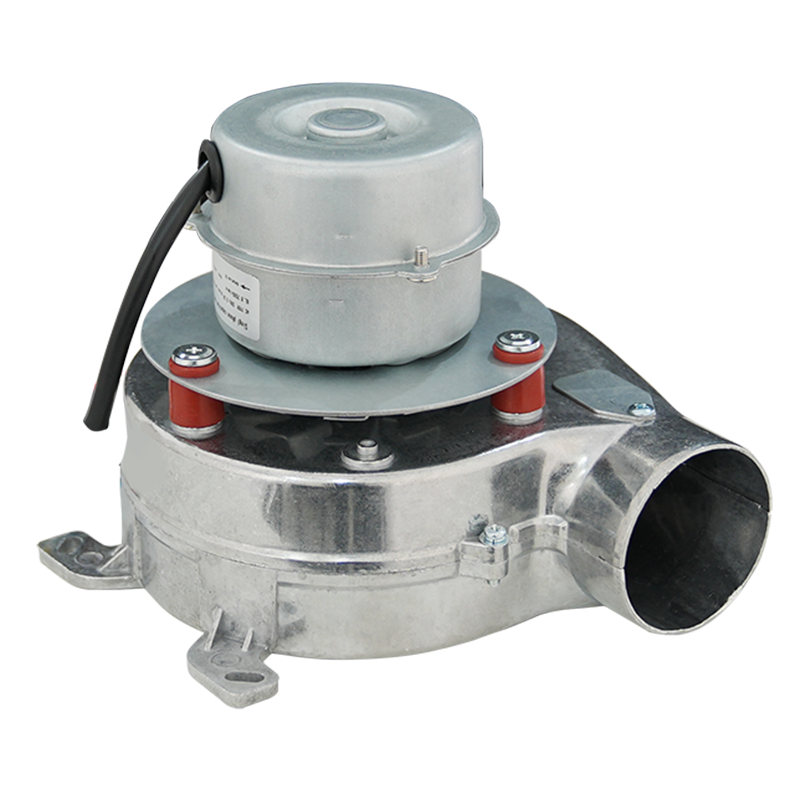
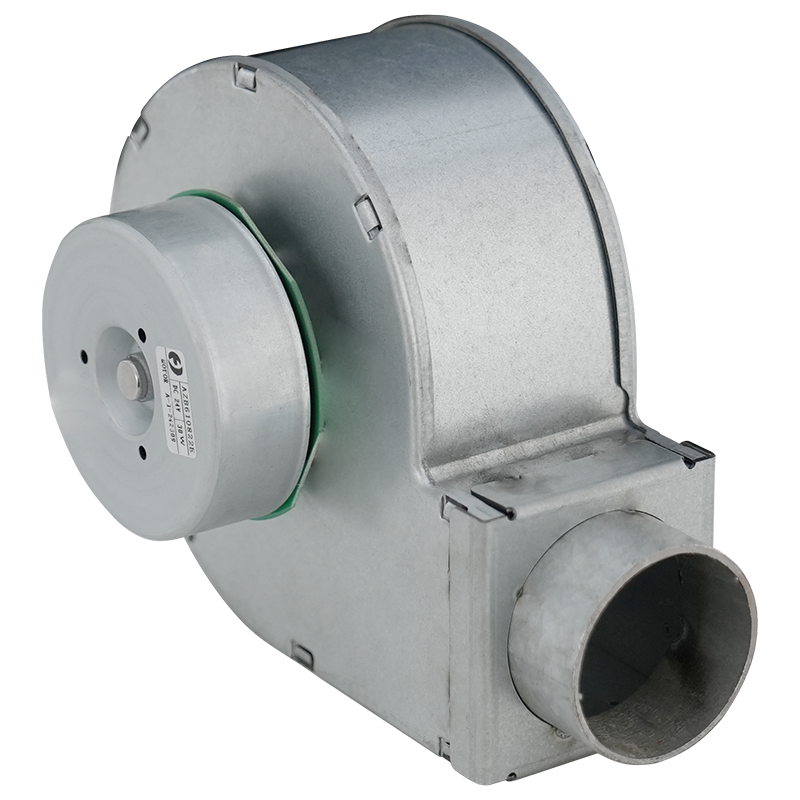
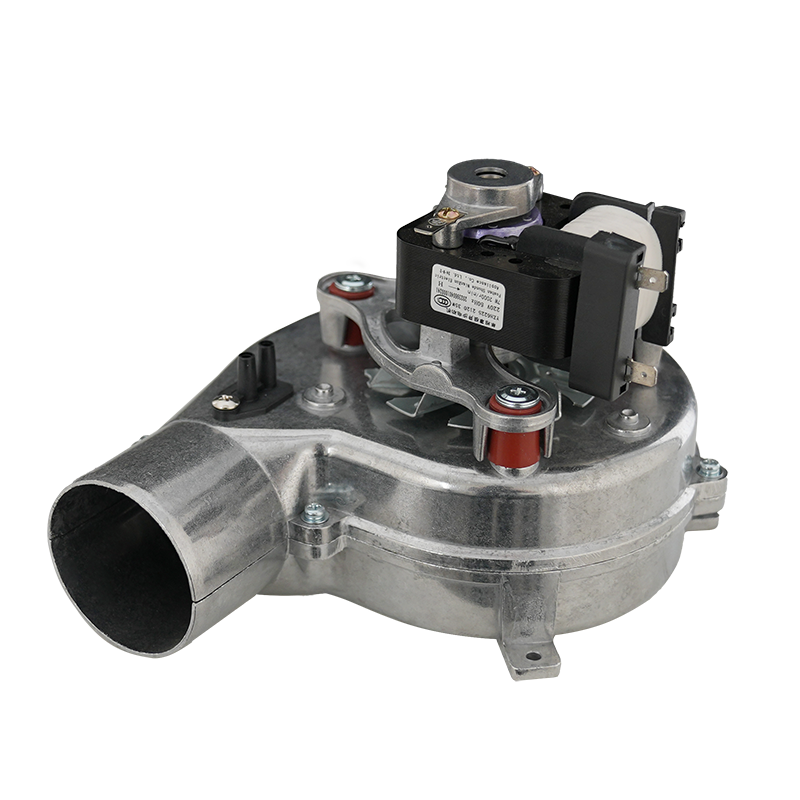
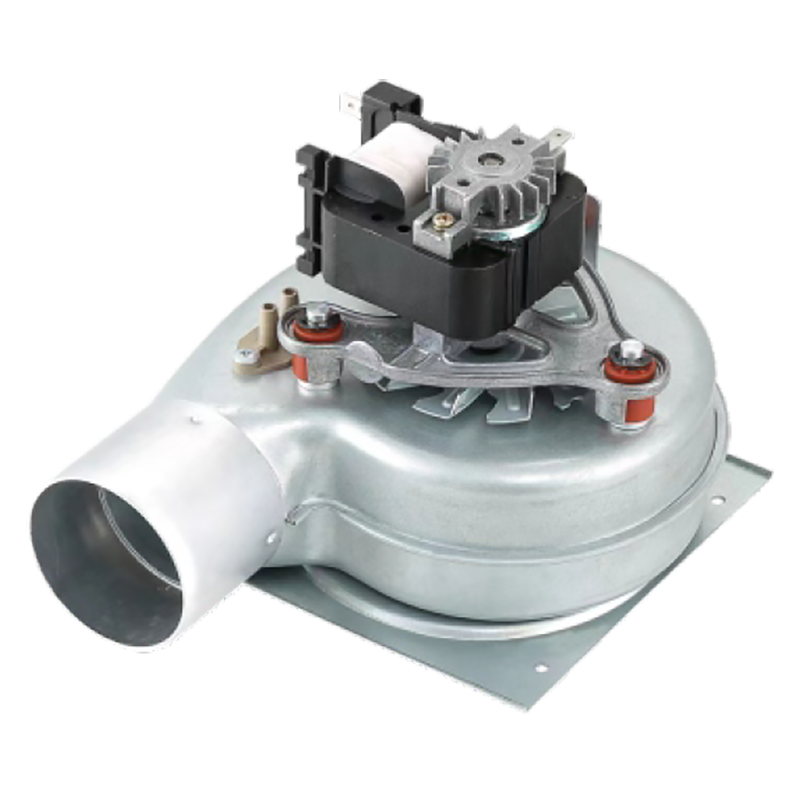
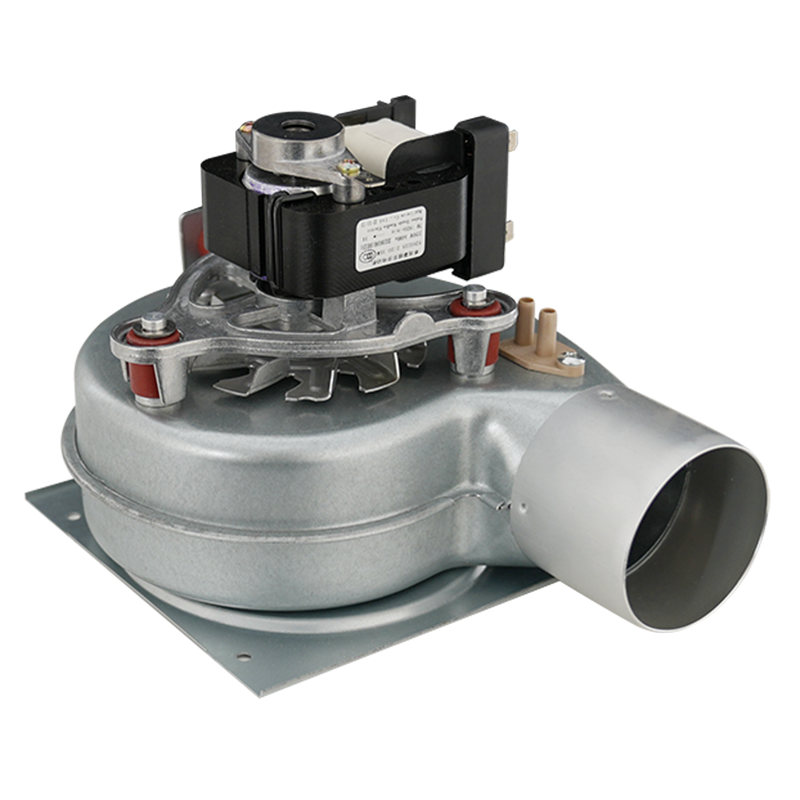
Small centrifugal fans and blowers consist of a motor, multi-bladed impeller, carbon steel volute, metal protective mesh, mounting bracket, capacitor, and other components.
This small centrifugal fan and blower features a multi-bladed, slanted impeller. Unlike conventional centrifugal fans, which use die-cast aluminum alloy casings combined with CNC precision machining, and unlike conventional centrifugal fans with welded iron, carbon steel, or stainless steel casings, this design offers a more refined and precise structure. For centrifugal fans of the same size, the aluminum alloy casing is less prone to rebound under airflow and pressure, resulting in lower equipment noise. This small centrifugal fan and blower features high airflow and can be used for both blowing and suction. Special installation options include with or without a base, and it can also be customized with an explosion-proof motor. It boasts a stainless steel impeller housing with Teflon corrosion protection, and high-temperature resistant models are also available.
Small Centrifugal Blower Models
This small centrifugal blower is currently available in seven models: 36W, 60W, 85W, 120W, 240W, 330W, and 500W, and three voltage options: 110V, 220V, and 380V. Based on the outlet flange, it can be divided into flanged and flangeless models. The 380V model does not include a mounting bracket.
Furthermore, the 330W and 500W models use an internal rotor motor, while the other models use an external rotor motor. Clearly, there is a significant difference in size and weight between the two types of small centrifugal fans, and of course, a considerable difference in airflow and air pressure.
Features of a small centrifugal blower:
Quiet operation and high efficiency are the main characteristics of a centrifugal blower fan. The steel impeller undergoes balancing testing, and its hub is directly mounted on the central shaft and secured with a hexagonal nut. After prolonged operation, the internal impeller and external electrodes require cleaning.
Speed: The rotational speed of the centrifugal fan and blower impeller directly affects the gas flow rate and pressure. Higher speeds result in greater gas pressure and flow rate.
Blade Shape: The design of the blades (e.g., forward-curved, backward-curved, or radial) affects the blower's performance. Different blade designs are suitable for different applications.
Airflow: The volume of gas passing through the centrifugal blower fan per unit time, usually expressed in cubic meters per minute (m³/min) or cubic meters per hour (m³/h).
Pressure: The pressure of the gas at the centrifugal blower fan outlet, usually expressed in Pascals (Pa) or kilopascals (kPa).
Advantages: High Efficiency: Centrifugal fans and blowers can generate high pressure and flow rates.
Stable: Centrifugal fans and blowers operate smoothly with relatively low noise.
Easy to maintain: Centrifugal fans and blowers have a simple structure, making them easy to maintain and repair.