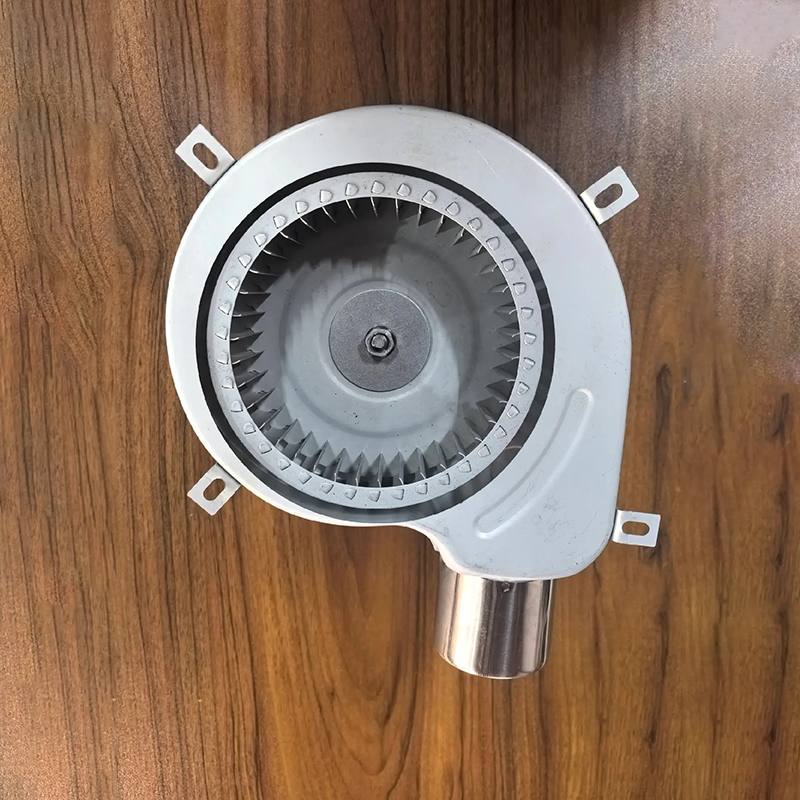

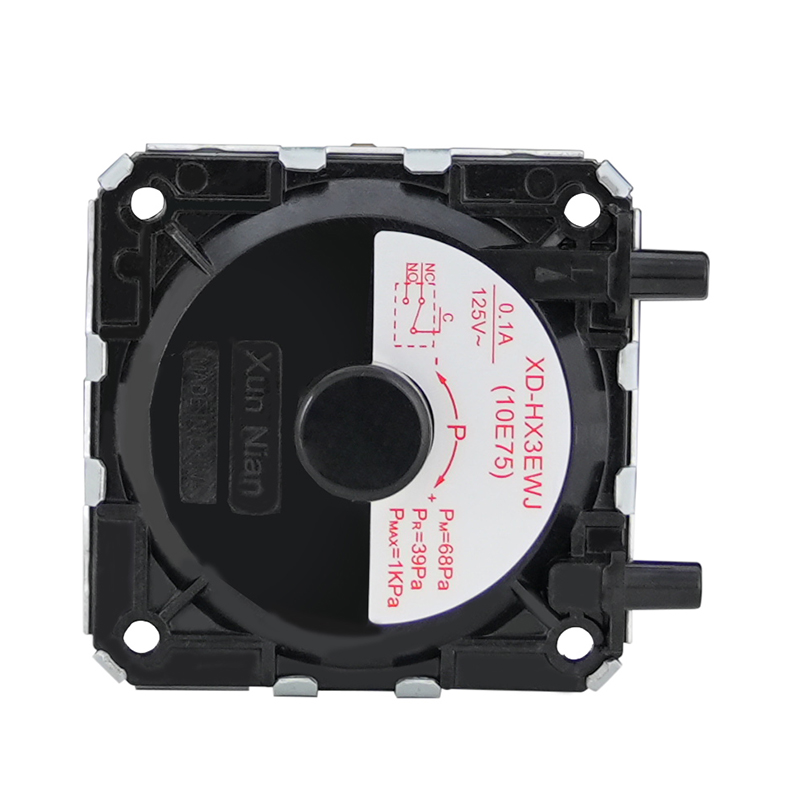
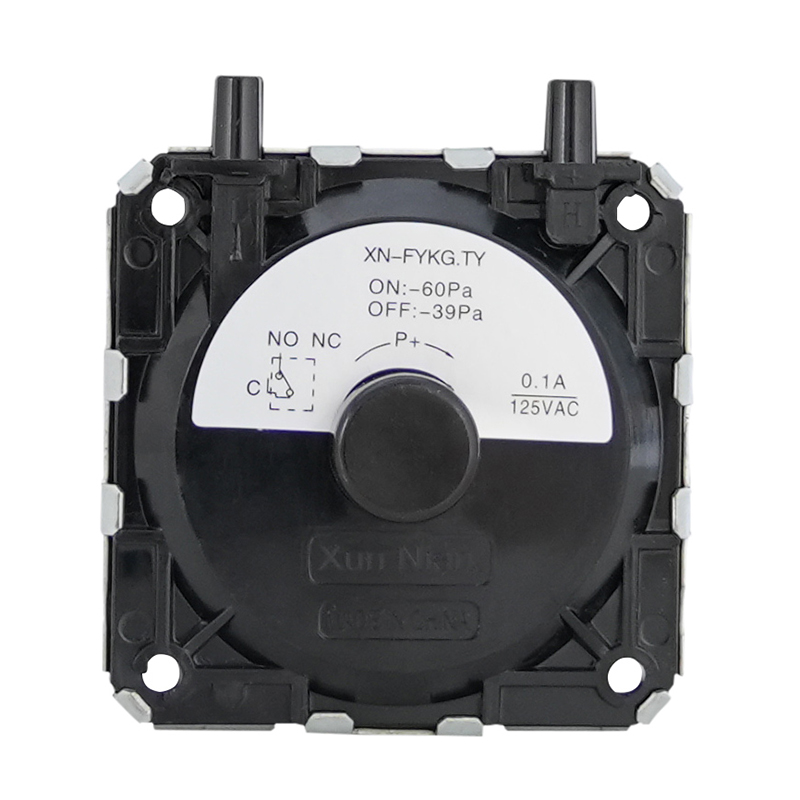
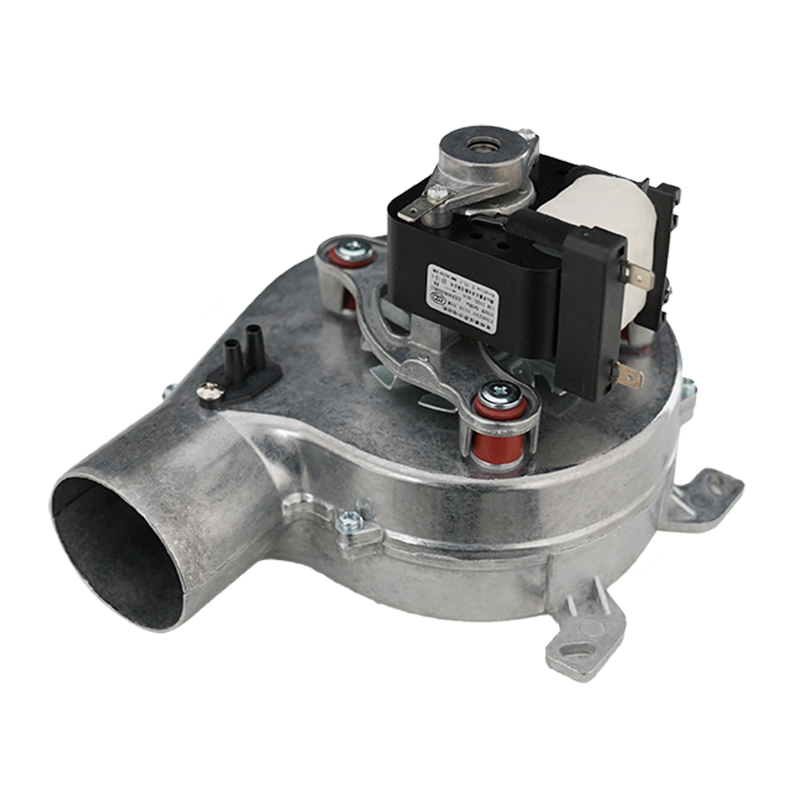
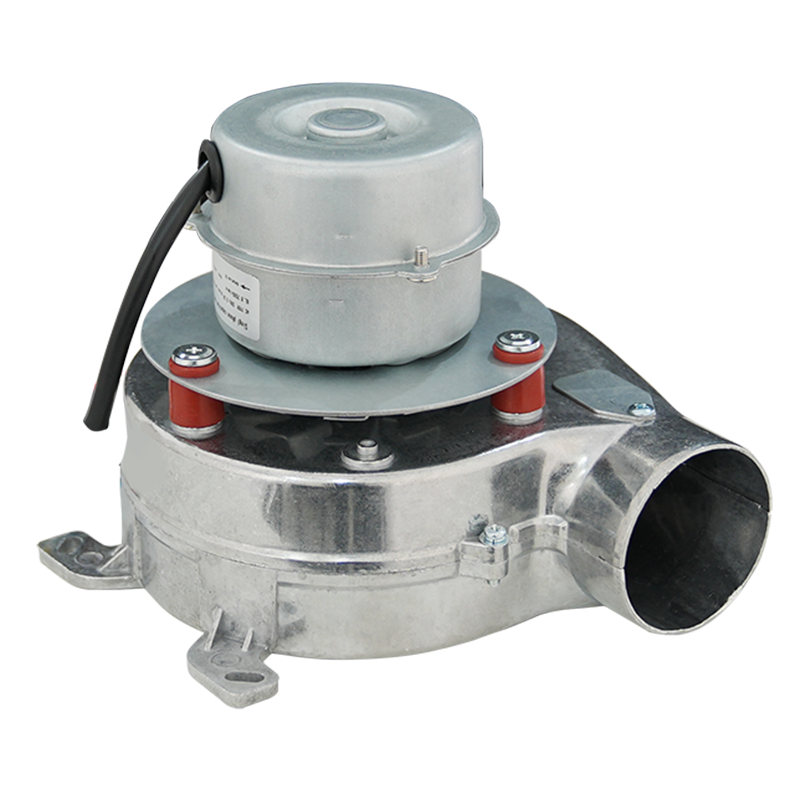
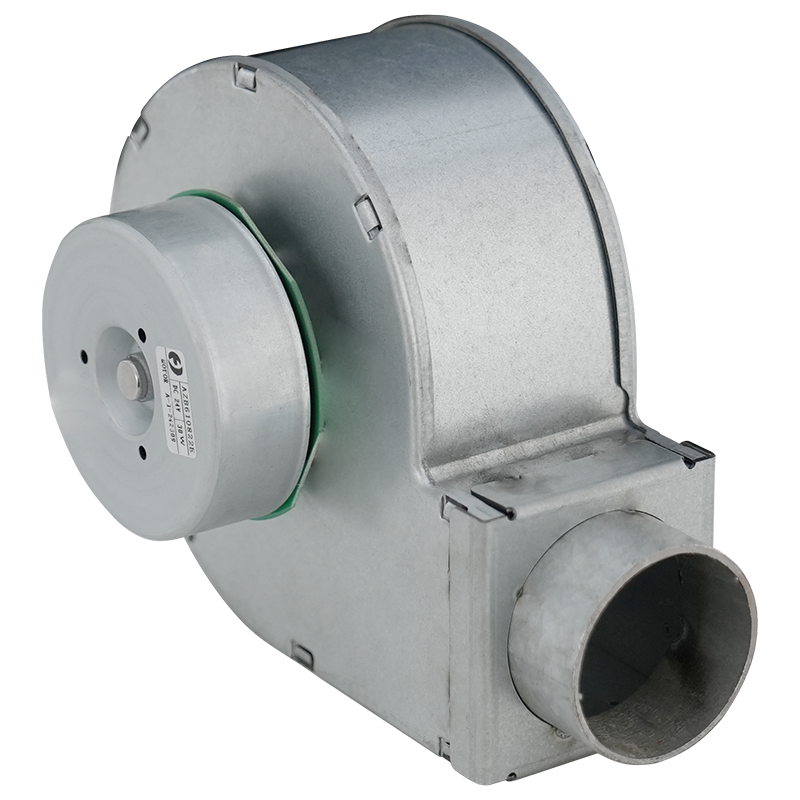
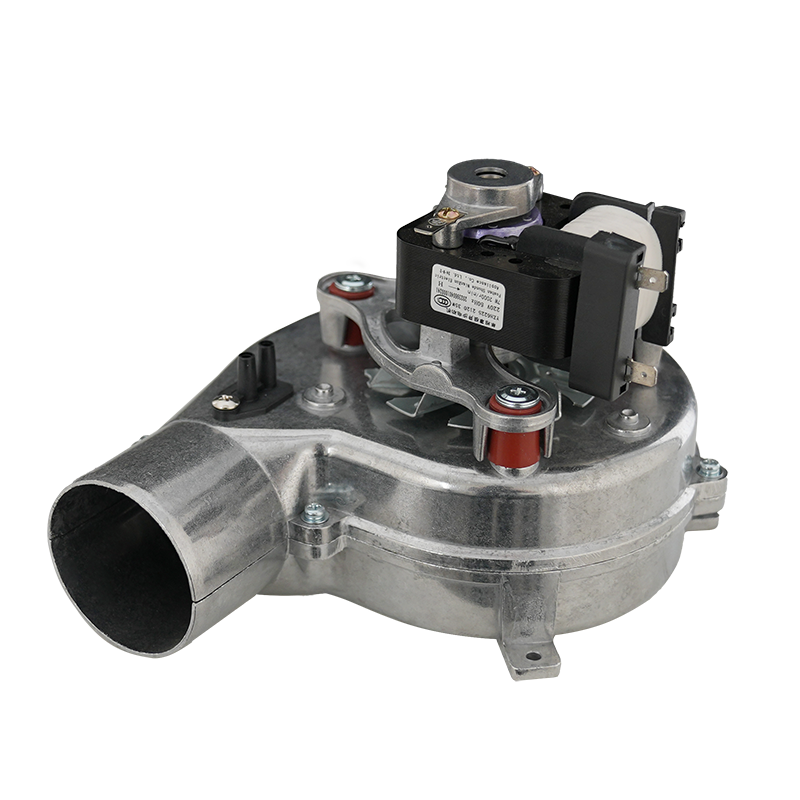
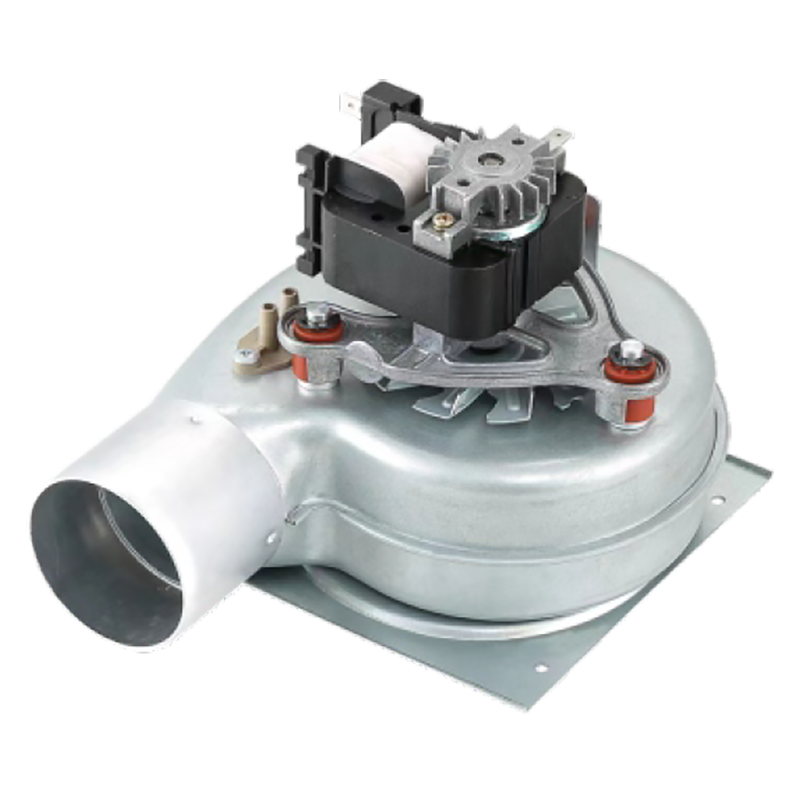
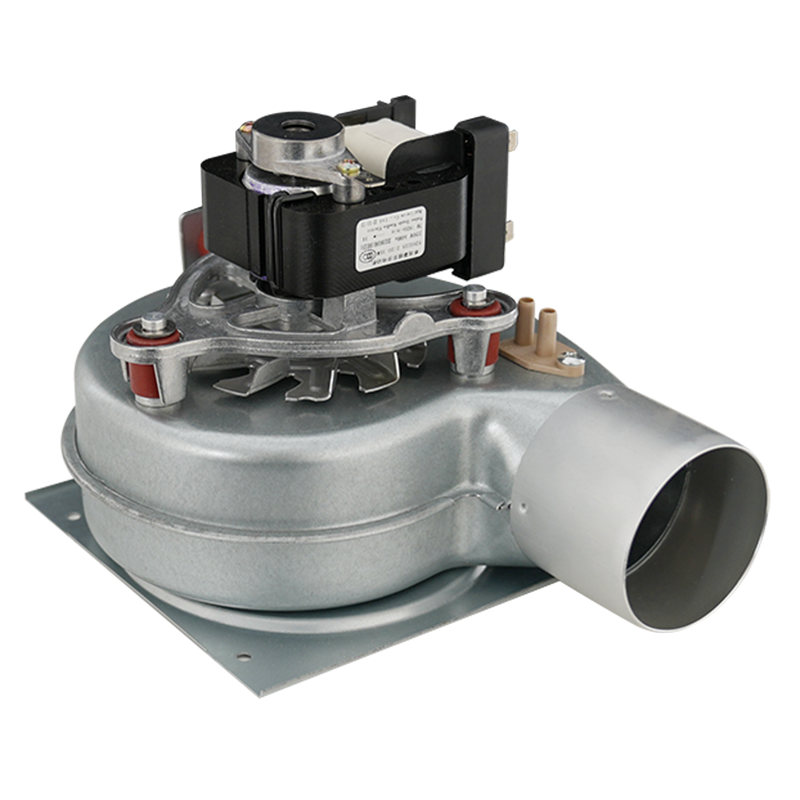
Centrifugal fans mainly consist of five core components, each of which has a crucial impact on the fan's performance:
1) Impeller: The key component for energy conversion, composed of blades, a front disc, a rear disc, and a hub. The impeller increases gas pressure through centrifugal force, and its geometry directly affects the fan's efficiency. The blade type of the centrifugal fan can be divided into three types based on the relationship between its outlet direction and the impeller's rotation direction: backward-curved, forward-curved, and radial.
2) Volute (Casing): The volute-shaped outer shell surrounding the impeller. Its main function is to collect the gas ejected by the impeller and guide it to the outlet. The design of the volute significantly affects the fan's efficiency and performance. The volute not only needs sufficient strength to withstand the gas pressure but also requires a reasonable flow channel design to reduce gas turbulence and energy loss.
3) Centrifugal blower fan inlet: The inlet where gas enters the blower. Its shape and location directly affect the gas flow pattern and the blower's efficiency. Common inlet designs are cylindrical or rectangular, usually located at the center of the impeller.
4) Motor: The power source driving the impeller's rotation. Centrifugal blower motors are typically three-phase asynchronous motors. The power and speed are selected based on the blower's design requirements. There are various motor installation methods, such as direct-drive and belt-driven.
5) Centrifugal blower fan transmission system and support structure: This includes the main shaft, bearings, and couplings, requiring a balance between speed and mechanical strength. The support structure ensures stable system operation and controls vibration and noise.
The differences between centrifugal fans and other fans: Centrifugal fans differ significantly from other types of fans (such as axial fans and Roots blowers) in their working principles and performance characteristics:
1) Difference between centrifugal fans and blowers and axial fans: Centrifugal fans draw air into the center of a rotating impeller and then push it outward (perpendicular to the impeller shaft) into a volute-shaped casing. Axial fans, on the other hand, allow air to flow parallel to the axis, in the same direction as the intake. Centrifugal fans are suitable for applications requiring higher pressure, while axial fans are more suitable for high-flow, low-pressure applications.
2) Difference between centrifugal fans and blowers and Roots blowers: Roots blowers compress air within the main and auxiliary impellers inside the blower to generate a certain airflow at a certain pressure. Centrifugal fans, however, mostly utilize the rotation of the impeller to create an airflow at a certain speed through centrifugal force, achieving the required airflow and pressure. The characteristic of Roots blowers is that when the rotational speed is constant, the air volume is constant, and when the resistance of the pipeline system increases, the air pressure also increases accordingly while the air volume changes very little.