
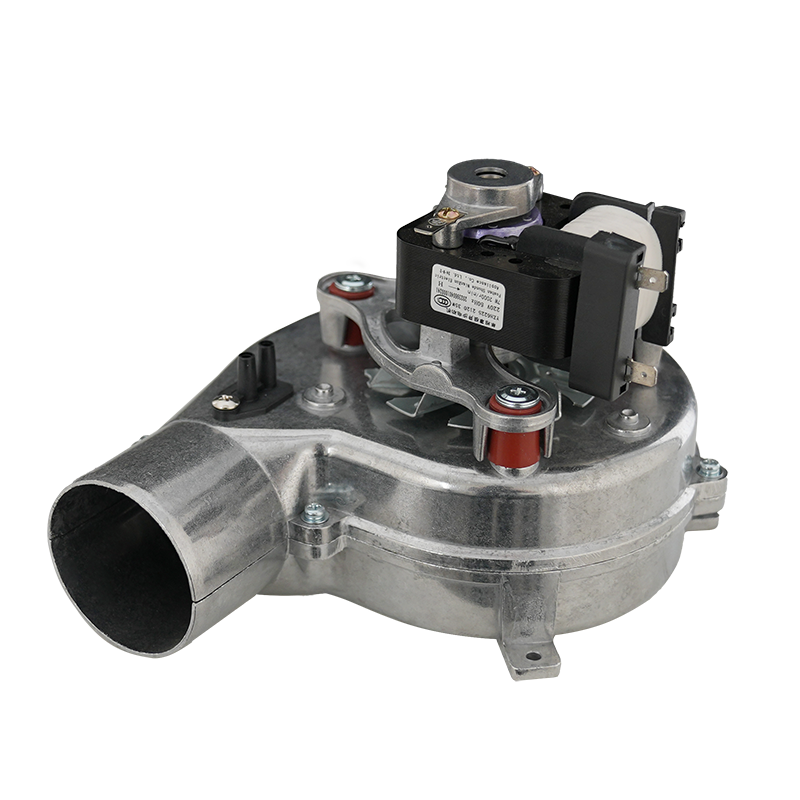
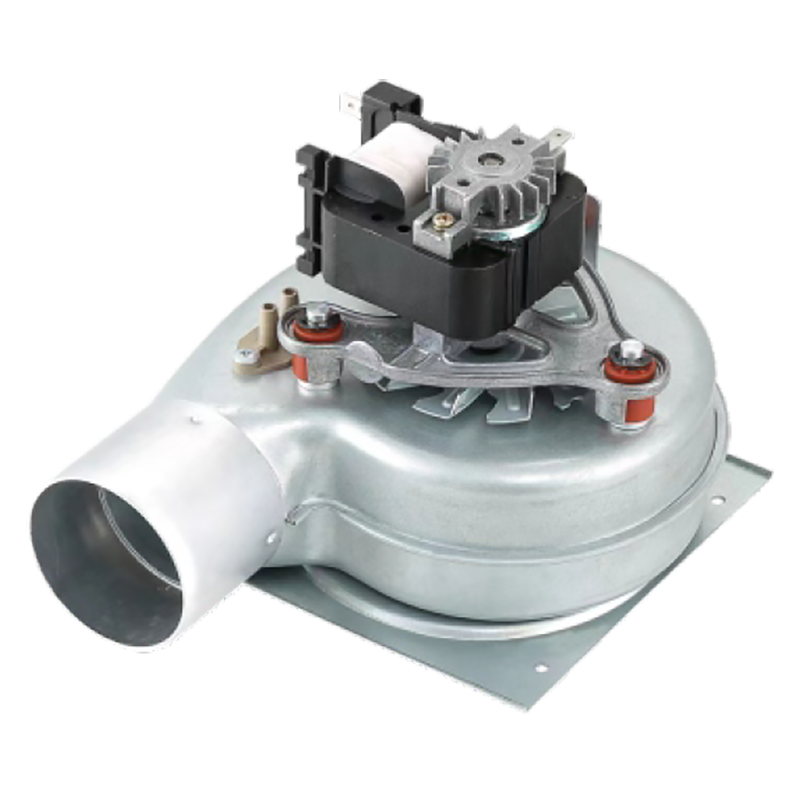
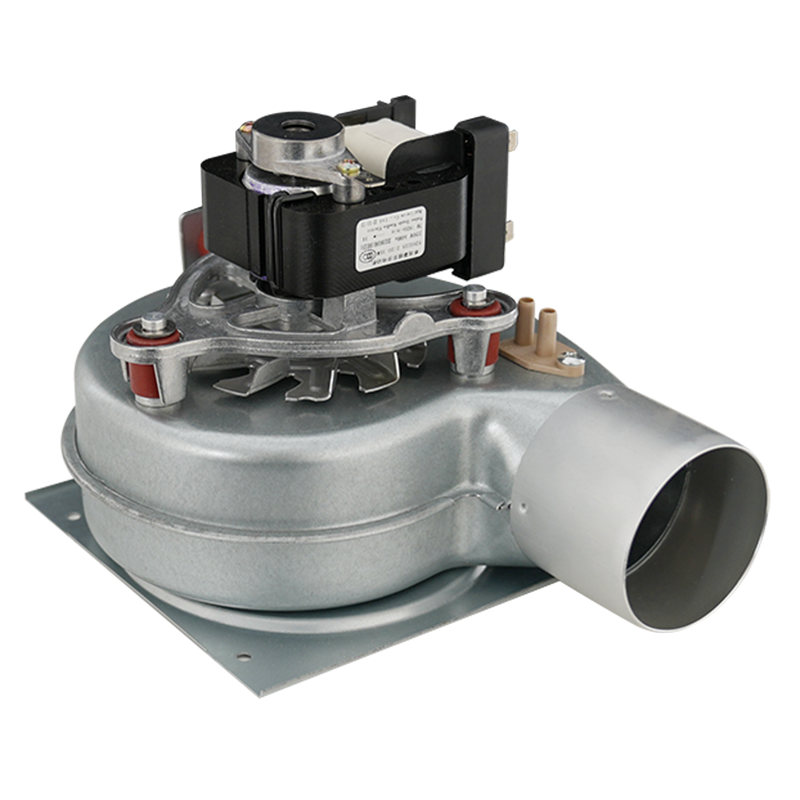
(1) Industrial Centrifugal Blowers Casing and Foundation
① The fixing bolts of the lower casing of the centrifugal blower fan should not be loose or deformed, and the casing or support should not have cracks. The centrifugal blower fan foundation should not have any offset or subsidence; the uniform subsidence should not exceed 0.8~1mm.
② The horizontal deviation of the centrifugal blower fan casing should be less than 0.05mm/m.
③ After the upper and lower casings of the centrifugal blower fan are joined, the maximum local gap should not exceed 0.05mm.
④The inside of the centrifugal blower fan casing should be clean, free of cracks and pores, and the welded casing should be well welded.
(2) Industrial centrifugal blower fan bearings
① For centrifugal blower fan sliding bearings, non-destructive testing should be performed. There should be no cracks, damage, or scratches. The thin-walled Babbitt alloy liner should be free from defects such as shelling, inclusions, porosity, grooves, detachment, overheating, or uneven wear.
② The thrust contact marks of centrifugal fans and blowers bearings should be uniformly contacting the circumference. The oil slinger ring should be smooth and burr-free, and the roundness tolerance should be less than 0.05 mm.
③ The bearing clearance and bearing back interference should be measured using the lead pressing method. The contact angle between the bearing shell and the journal should be 60°~90°, and the axial contact area should be no less than 80%. At least 3 contact points per square centimeter should be checked using red lead oil. The clamping interference between the bearing shell and the bearing housing should be within the range of 0.03~0.05 mm. The top clearance between the bearing shell and the journal should be 0.15%~0.20% of the journal size, and the side clearance should be half the top clearance value. The split surfaces of the upper and lower bearing shells should have good and uniform contact. The contact between the thrust bearing and the thrust surface at the shaft end should be uniform, and the contact area should not be less than 70%. The total thrust clearance on both sides of the bearing shell is usually 0.30~0.40mm.
(3) Industrial bearing rotor assembly
① Clean and inspect the bearing rotor, remove accumulated dust and dirt from the impeller, check for friction marks between the impeller inlet seal and the casing, ensure the impeller weld is free of cracks and open welds, and ensure that the blades and disc are not detached. The connecting bolts and anti-loosening washers between the bearing impeller and the shaft should be intact and free of looseness. The rivets of the riveted impeller should not be loose or fall off. If the impeller blades are corroded, after repair by welding, the rotor must be dynamically balanced. The centrifugal blowers' accuracy should not be lower than ISO G2.5 grade.
② Check the radial runout and end face runout of all parts of the centrifugal blower rotor.
③ Check the longitudinal levelness deviation of the centrifugal blower spindle; it should not exceed 0.2 mm/m (the level instrument accuracy should not be lower than 0.02 mm/m). The centrifugal blower spindle surface should be free of cracks, scratches, and other defects, and the journal surface roughness should be lower than Ra 1.25 μm.
④ Maximum straightness deviation of the centrifugal blower spindle.
⑤ The centrifugal blower rotor assembly should undergo non-destructive testing.
(4) Industrial Centrifugal Blowers Seals
Inspect the corrosion and wear of the blower centrifugal impeller sealing ring. Technical requirements vary depending on the seal structure. Generally, the seal fits the casing with a clearance fit. However, for comb-tooth seals, each tooth tip is a "bayonet" type; the comb tooth tips should not be worn down, tilted, or deformed.
For expansion ring seals, the expansion ring should be able to sink into the groove, and its side clearance should be within the range of 0.05~0.08mm. There should be a gap of 0.20~0.30mm between the inner surface of the blower centrifugal seal and the bottom of the groove.
The radial radius clearance between the impeller front cover plate and the casing sealing ring of the centrifugal blower is 0.35~0.50mm. The end face and radial clearance between the impeller inlet ring and the casing of the centrifugal blower should not exceed 12mm. When using felt seals for shaft sealing, only one joint is allowed, and the joint should be located at the top. The clearance between the housing seal cover and each side of the shaft generally does not exceed 1-2 mm.
(5) Industrial centrifugal blowers
The most commonly used are flexible pin couplings, but gear couplings are also used. Flexible pin couplings have mobility and buffering/vibration absorption functions, and can compensate for misalignment caused by alignment.
① Before disengaging the coupling, the Y value (radial displacement, 0.3-0.6 mm) and X value (axial displacement, 2-6 mm) and the misalignment angle (should be less than 1°) should be checked again.
② Check that the flexible ring, bolts, intermediate spacer, and half-coupling are free from cracks, deformation, and other defects.
③ For gear couplings, the inner and outer gear rings should be disengaged for cleaning, and the wear condition of the inner and outer surfaces of the gear tips and sleeves should be checked, and physical and chemical testing should be performed.
(6) Centering and Alignment of Industrial Centrifugal Blowers A single or double dial indicator can be used to center and align the blower.
① For flexible pin couplings, during centering and alignment, one side of the blower should be leveled to ensure that the center line of the blower shaft and the center line of the motor shaft are on the same center line. The deviation should not exceed 0.05mm.
② For gear couplings, move the gear coupling axially to allow free movement of both couplings.
When rotating the gear coupling, measure at four points: top, bottom, left, and right. The misalignment of the inner and outer gear rings of the gear coupling should be less than 0.06mm, and the parallelism deviation between the two couplings should be less than 0.05mm.